Albert Bandura and Bobo Doll sprites with Pixelorama

Author: edtech

Free Inquiry – Starting Point

I have decided to take up a project I had intended to do over the Christmas Break, but had to abandon. I wanted to make a pixel animation of the Bandura Bobo doll experiments that might be fun to include in our presentations in psychology. I plan to use Pixelorama, which is a free pixel-animation software that I have used before. The version I am using is v1.05-stable.

Previously, I have used this in my classes when I taught middle school students in Gwangju, Korea. Here are some examples:

This is a .gif I used to illustrate what a character might be thinking. I was teaching from the Rocket Girl series, in which the main character is a superheroine who conceals her identity from her friends. She excuses herself to the toilet to change into her costume, but leaves the school. One of her friends remarks on her long absence, thus this sprite.

I like to start characters by making a rotating T-pose. This gives me multiple perspectives of the character, which are fairly easy to modify. The Rocket Girl characters all started as spinning T-pose characters.

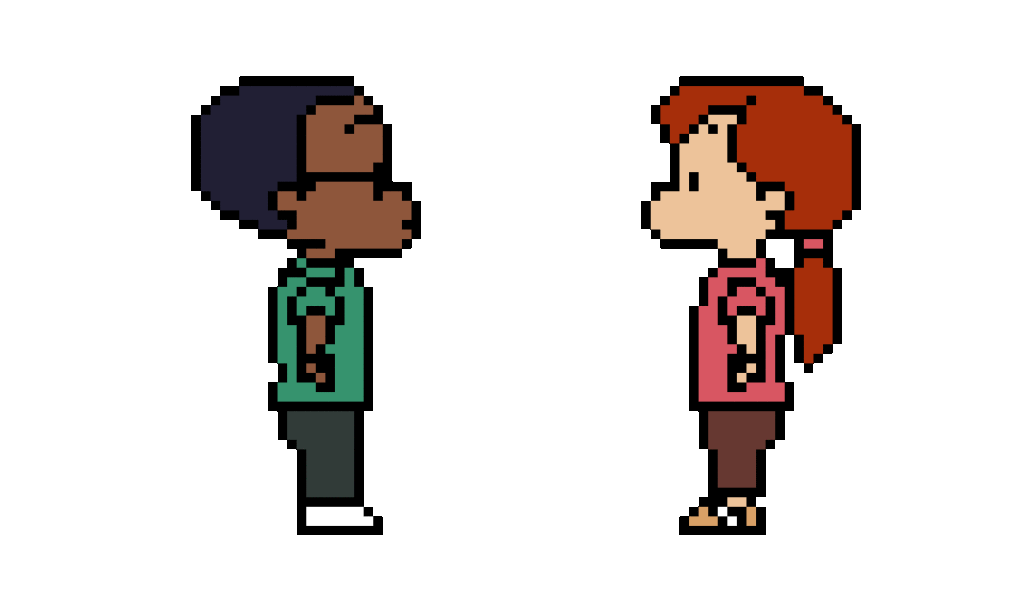
I then modified them for my classes. The .gif below was created for an icebreaker exercise. When teaching students for whom English is an L2, I find it is better to show them what to do with a minimum of text.
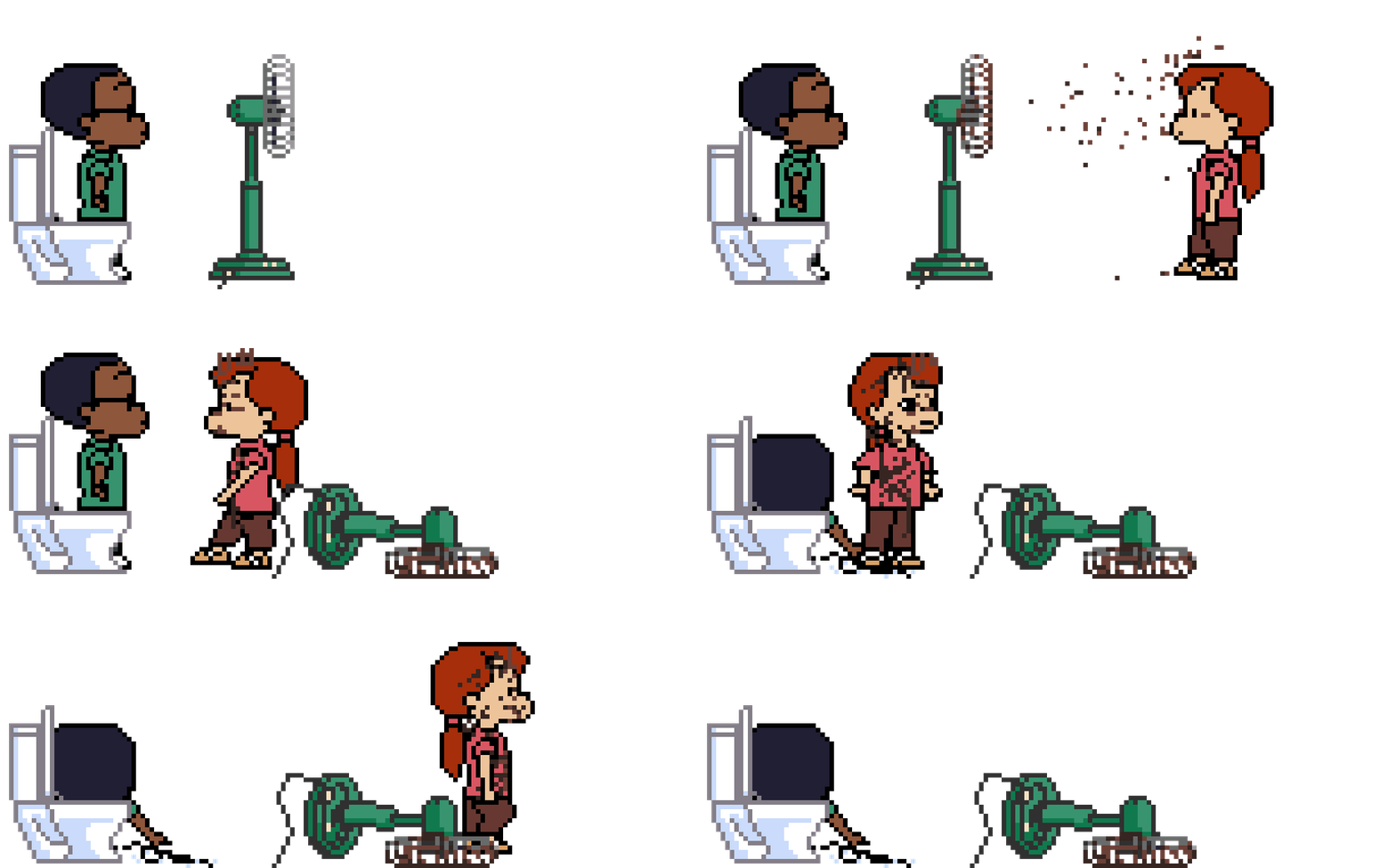
This one started as an illustration for the idiom, “When the shit hits the fan,” but I extended it and used it as a slide to introduce when we were to play a game.
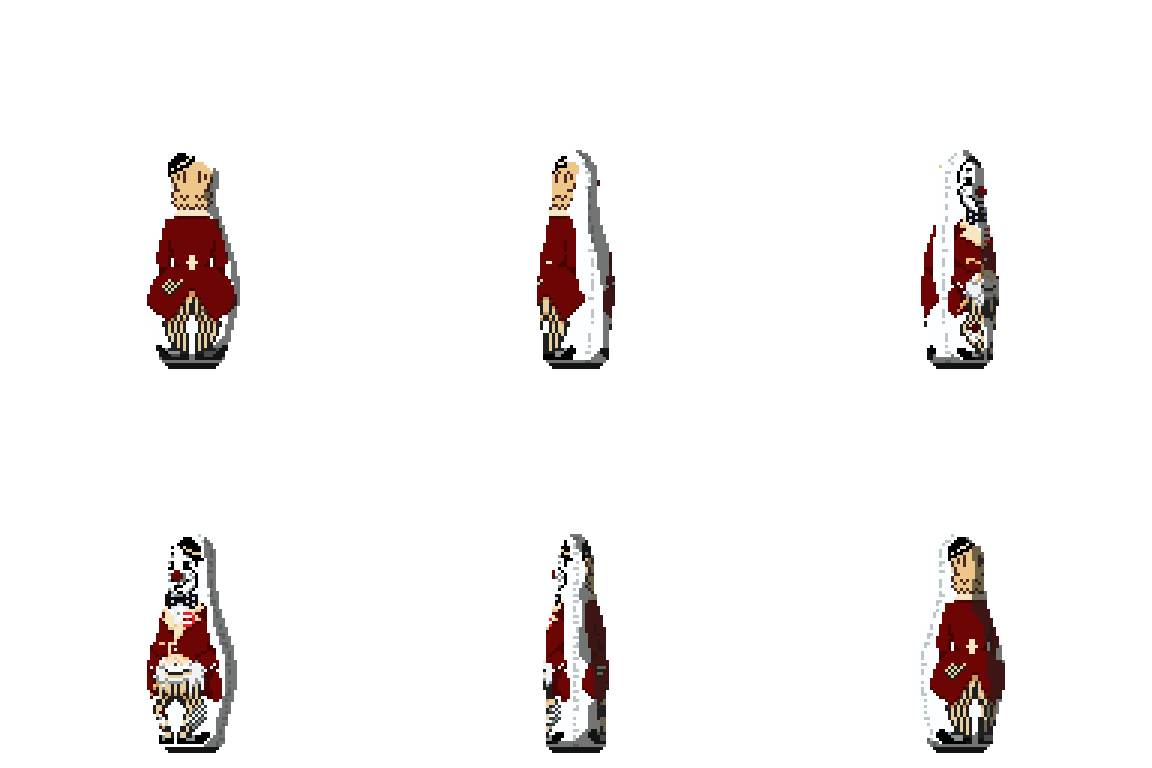
For my Bandura .gifs, I am going to make the sprites of higher resolution. I also want to have a more 3D feel, with action happening in depth. So far, I have made a sprite for the Bobo doll. It only spins currently, but I am quite pleased with its resemblance to the original and the smoothness of its movement. The shadow, which is on a separate layer in the original file, is a little dark and not quite in line with what I have in mind, but I shall leave it for now.
Welcome and Introduction

Before proceeding with this first blog post, we expect you to consider your privacy preferences carefully and that you have considered the following options:

  1. Do you want to be online vs. offline?
  2. Do you want to use your name (or part thereof) vs. a pseudonym (e.g., West Coast Teacher)?
  3. Do you want to have your blog public vs. private? (Note, you can set individual blog posts private or password protected or have an entire blog set to private)
  4. Have you considered whether you are posting within or outside of Canada? This blog on opened.ca is hosted within Canada. That said, any public blog posts can have its content aggregated/curated onto social networks outside of Canada.

First tasks you might explore with your new blog:

  • Go into its admin panel found by adding /wp-admin at the end of your blog’s URL
  • Add new category or tags to organize your blog posts – found under “Posts” (but do not remove the pre-existing “EdTech” category or sub-categories, Free Inquiry and EdTech Inquiry). We have also pre-loaded the Teacher Education competencies as categories should you wish to use them to document your learning. If you would like to add more course categories, please do so (e.g., add EDCI 306A with no space for Music Ed, etc.)
  • See if your blog posts are appearing on the course website (you must have the course categories assigned to a post first and have provided your instructor with your blog URL)
  • Add pages
  • Embed images or set featured images and embed video in blog posts and pages (can be your own media or that found on the internet, but consider free or creative commons licensed works)
  • Under Appearance,
    • Select your preferred website theme and customize to your preferences (New title, etc.)
    • Customize menus & navigation
    • Use widgets to customize blog content and features
  • Delete this starter post (or switch it to draft status if you want to keep for reference)

Do consider creating categories for each course that you take should you wish to document your learning (or from professional learning activities outside of formal courses). Keep note, however, that you may wish to use the course topic as the category as opposed to the course number as those outside of your program would not be familiar with the number (e.g., we use “EdTech” instead of “edci336).

Lastly, as always, be aware of the FIPPA as it relates to privacy and share only those names/images that you have consent to use or are otherwise public figures. When in doubt, ask us.

Please also review the resources from our course website for getting started with blogging: