EdCamp
Today, we did an EdCamp. This is where each of us proposed a topic that we would like to discuss, posting it to a board. We then voted by individually choosing three topics that most interested us. The 5 topics that received the most votes were selected for discussion and assigned to breakout rooms, after which we joined the breakout room of our choice and had a discussion.
I thought this was a very good way of having productive discussions, because it rather nearly guarantees there will be a topic that interests everyone and to which everyone will be comfortable contributing.
The discussion I joined was “Student Motivation and Reluctant Learners” which included the two main questions:
- How would YOU approach a reluctant learner?
- At what point do you think you should get the parents involved? What are some of the next steps?
These are the notes from that discussion:
https://docs.google.com/document/d/1YcimEdzF8MMtRQGxPMNP9jrH_39U2zLLfO8TfTj6BXU/edit?tab=t.0
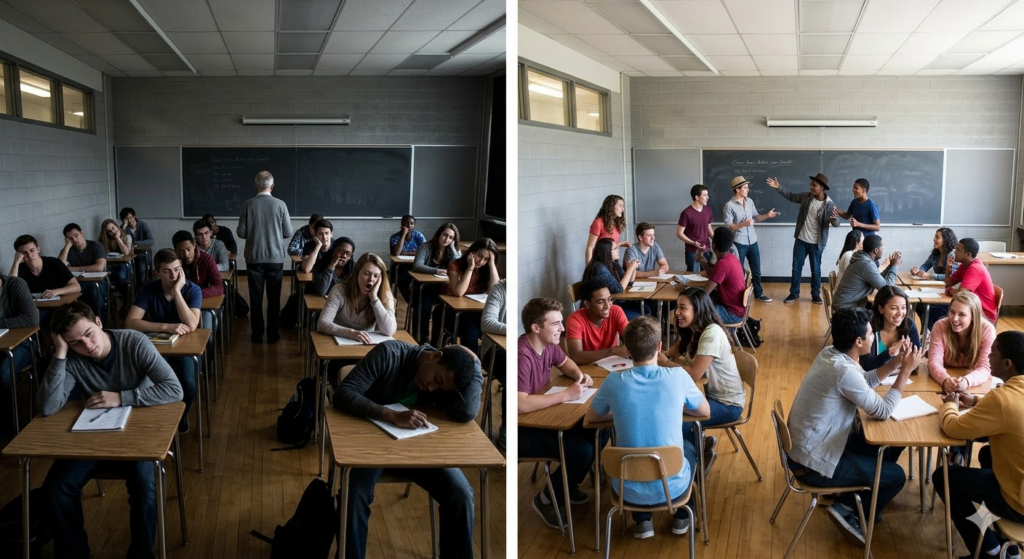
Some of the reasons for a lack of motivation that were mentioned were the absence of higher education as a goal for some, the prevalence of smartphones both in and outside of class and lack of proper scaffolding. The lack of scaffolding stems from the gulf between the high expectations we have of students in secondary education and their actual ability and knowledge. We also considered the students are bored because of our boring lessons. My question related to this point was: “Would you watch a YouTube video of your lesson?”
When I was in Korea during the Covid pandemic, I had already been teaching at middle school for two years. As part of the remote learning, I had to make videos of all my lessons so that the students could access them on the school website. Making the lessons into videos showed me how boring my lessons were and forced me to make changes in order to make a lesson the students would actually watch. I radically rewrote all my material and I was much more effective and the students were much more engaged. They need to want to watch and take part.
This was a good experience and I would prefer this way of doing things whenever I have to take part in group discussions professionally.